How to Select the Optimal Portable X-ray Fluorescence Analyzer
Portable X-ray Fluorescence Analyzer – JYBO Handheld XRF Analyzer
Investing in an X-ray fluorescence (XRF) analyzer for metal analysis constitutes a significant decision. Please follow the steps below to ensure you select an appropriate instrument:
1. Clarify your application: Do you specialize in gold testing, outdoor scrap metal sorting, or verification of complex alloys? For on-site testing and mining applications, a rugged handheld X-ray gun is the optimal choice. If you need to test materials at multiple indoor locations, a portable benchtop XRF analyzer equipped with a touchscreen achieves an excellent balance between stability and portability.
2. Consider accuracy requirements: If you operate a gold refinery, you may require an accuracy of 0.01% or even 0.001%. In this scenario, please ensure your instrument is equipped with a top-tier SDD detector. For ordinary jewelry stores or pawnbrokers that verify standard karat values, a high-quality Si-PIN detector can provide sufficient accuracy at a more cost-effective price point.
3. Evaluate your business model and budget: Established international major brands typically maintain high profit margins due to their extensive distribution networks. You may procure instruments directly from professional manufacturers to optimize your budget. Brands offering a "direct-to-consumer factory sales" model can generally deliver the same technical accuracy at a price that is 20% to 40% lower, as intermediate links are eliminated.
4. Inspect the software and usability: The performance of an analyzer is dependent on the skill level of operators. Prioritize instruments marketed to be "operable after 3 minutes of training". Non-specialist personnel should be able to master instrument operation quickly to avoid bottlenecks in work processes.
5. Request reliability testing: Inquire about the manufacturer's quality control protocols. The highest-quality XRF analyzers all undergo rigorous environmental stress testing prior to delivery — for example, a 72-hour stress test — to ensure they operate perfectly across varying temperatures and working conditions.
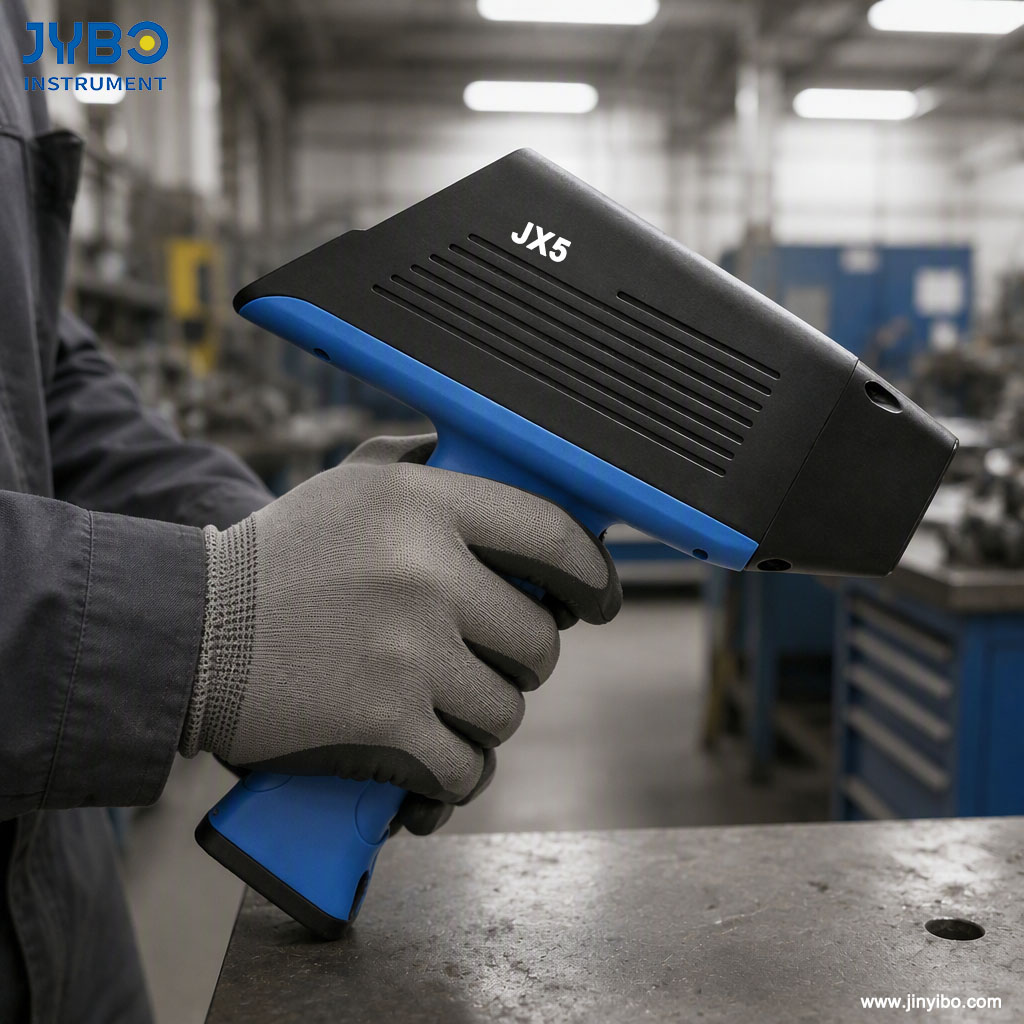
Common Pitfalls When Purchasing XRF Analyzers
Even experienced buyers may make mistakes when investing in metal analysis equipment. Avoid the following common pitfalls: Focusing solely on price: Opting for the least expensive equipment usually means compromising detector quality. Low-quality detectors lead to inaccurate readings, which may cause you to purchase counterfeit gold or misclassify scrap metals, resulting in greater financial losses in the long run.
Neglecting detector technology: Failing to select an appropriate detector type that matches actual accuracy requirements (e.g., Si-PIN versus SDD).
Overlooking calibration and software support: XRF analyzers are highly dependent on sophisticated algorithms. Instruments equipped with standard software may be inadequate for demanding tasks, while devices incorporating the advanced Multi-FP algorithm deliver more reliable quantitative analysis results.
Choosing an incorrect form factor: Purchasing a bulky benchtop model when your team needs to test heavy automotive components on the factory floor, or procuring a handheld device when you require the ultra-high stability of a closed laboratory instrument.
Conclusion: Portable XRF analyzers are powerful, disruptive tools for metal analysis. Whether you are engaged in scrap sorting, mineral exploration, or operating a pawnshop, these instruments provide rapid, accurate and non-destructive testing capabilities.
FAQ
1. What is the main operational difference between a Silicon Pin (Si-PIN) detector and a Silicon Drift Detector (SDD)?
The main differences between Si-PIN and SDD detectors are their count-rate capability, energy resolution, and sensitivity to low-energy X-rays. Si-PIN detectors are cost-effective and suitable for routine XRF applications, such as identifying major alloying elements, sorting metals, and determining common alloy or precious-metal grades. SDD detectors generally provide higher count-rate capability and better energy resolution, allowing faster measurements and improved detection of lower-concentration elements and light elements such as Mg, Al, Si, P, and S. The actual detection limits and analytical performance depend on the complete XRF system, including the X-ray source, detector configuration, measurement conditions, sample matrix, and calibration method.
2. Why is calibration—especially algorithms such as Fundamental Parameters (FP)—so important for XRF accuracy?
X-ray fluorescence (XRF) is an indirect analytical technique in which measured X-ray intensities can be affected by matrix effects, including absorption, enhancement, and spectral interferences between elements. Empirical calibrations can provide excellent accuracy when the sample matrix and composition range are well represented by appropriate reference standards. However, they may be less flexible when analyzing complex, variable, or non-standard materials.
Fundamental Parameters (FP) methods use physical models of X-ray excitation, fluorescence, absorption, and enhancement to compensate for matrix effects. This can reduce the reliance on extensive matrix-matched standards and improve the flexibility of quantitative analysis across different alloy compositions. In practice, FP-based analysis can be particularly useful for unknown or complex alloys, although the final accuracy still depends on instrument configuration, sample condition, measurement geometry, calibration or standardization, and the suitability of the FP model for the application.
Please contact us for further inquiries or detailed information!
Tel:+86-183-5283 6805
Email:sales@jinyibo.com
Web:www.jinyibo.com