Mobile Metal Analyzer for Oil and Gas Pipeline Material Analysis
Overview
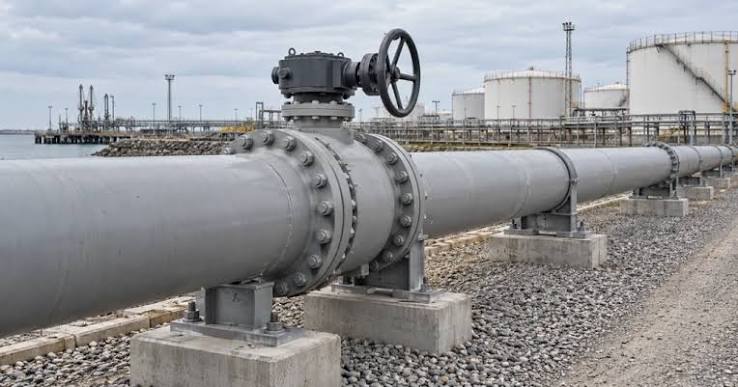
Oil and gas pipelines operate in demanding environments where the chemical composition of pipes, valves, flanges, and welded components directly affects corrosion resistance, weldability, and operational reliability. A mobile metal analyzer enables rapid on-site metal composition analysis and material grade identification, supporting Positive Material Identification (PMI), incoming material inspection, installation quality control, and in-service material verification.
On-site PMI helps verify material identity and reduce the risk of material mix-ups. However, the acceptance of test results depends on the analytical method, instrument performance, and applicable project specifications. When discrepancies arise between test results and material certificates, further verification or laboratory analysis should be conducted according to relevant standards and project requirements.
1. Why Is Metal Material Analysis Important for Oil and Gas Pipelines?
Oil and gas pipeline systems involve various materials, including carbon steel, low-alloy steel, stainless steel, and corrosion-resistant alloys. These materials differ in chemical composition, mechanical properties, corrosion resistance, and weldability.
Using materials that do not meet design specifications, or mixing different material grades during procurement, storage, fabrication, or installation, can lead to welding problems, accelerated corrosion, and potentially serious failures such as pipeline leakage.
Therefore, checking material certificates alone may not be sufficient. On-site chemical composition testing provides an additional means of verifying actual material grades and supporting pipeline quality control.
A mobile metal analyzer brings testing capabilities directly to the job site, helping operators improve material verification efficiency and reduce the risk of using incorrect materials.
2. Key Applications of Mobile Metal Analyzers in Oil and Gas Pipelines
2.1 Material Grade Identification of Pipes and Fittings
Oil and gas pipeline systems contain various components, including pipes, elbows, tees, flanges, valves, and connecting fittings. Although some materials look similar, their alloy compositions can differ significantly.
A portable metal analyzer spectrometer can measure elements such as chromium (Cr), nickel (Ni), molybdenum (Mo), and manganese (Mn) to help identify stainless steel and alloy steel grades and verify compliance with design specifications and procurement requirements.
Conducting material inspections during incoming quality control, warehouse management, and pre-installation checks helps identify incorrect or mixed materials before they enter subsequent production or construction processes.
When using handheld XRF analyzers on thin-walled pipes and fittings, factors such as wall thickness, component geometry, backing materials, and measurement conditions must be considered. Substrate penetration or backing interference may affect results. Validated testing procedures or alternative analytical methods should be used when necessary.
2.2 Material Verification Before and After Welding
During pipeline fabrication, assembly, and welding, verifying the composition of base metals, fittings, and alloy components is essential.
A mobile Spark Optical Emission Spectrometer (Spark-OES) can perform on-site elemental analysis of suitable metal materials. Depending on its configuration and calibration, it can measure carbon, manganese, silicon, and other elements, providing data for material verification and carbon equivalent (CE) calculations.
For carbon equivalent assessment, the formula specified by the project must be used. The instrument's elemental measurement capability, calibration range, and measurement uncertainty must also meet the applicable requirements.
For weld metal and heat-affected zones (HAZ), testing locations and analytical methods should be determined according to the inspection plan. Weld metal composition may be affected by filler metal, base metal dilution, and welding procedures. A single measurement only represents the local test area and should not be treated as equivalent to the chemical composition stated in the filler metal certificate or used as the sole basis for weld acceptance.
All testing should follow the applicable welding procedures, quality control documents, and project specifications.
2.3 Material Verification of In-Service Pipelines and Equipment
For pipelines, refinery equipment, and pressure vessels already in operation, original material records may be incomplete. Material verification may also be necessary following maintenance, replacement, or equipment modifications.
A mobile OES enables on-site material verification of suitable pipeline components and metal equipment. It helps confirm alloy composition and provides supporting data for maintenance, material traceability, and risk assessment.
For pipeline systems exposed to risks such as flow-accelerated corrosion and sulfide corrosion, chemical composition analysis can form part of an overall asset integrity management program. However, it cannot replace wall thickness measurements, corrosion assessments, or other required non-destructive testing (NDT).
It is important to note that mobile Spark-OES testing leaves small ablation marks on the metal surface. Before testing an in-service pressure pipeline, the potential surface damage must be evaluated, and the testing method must comply with owner requirements, asset integrity management procedures, and applicable safety regulations.
Where direct spark testing on pressurized pipeline surfaces is not permitted, alternative methods approved by the project may be considered. If reference samples, spare parts, or associated components are tested, their material representativeness must be verified. Their results cannot automatically replace direct material identification of the pipeline itself.
2.4 Pipeline Maintenance and Material Traceability
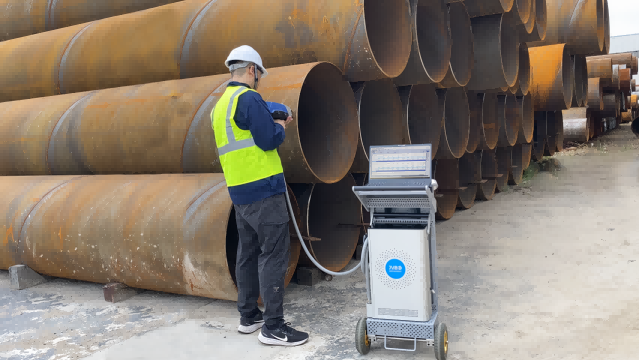
Large oil and gas pipeline projects often involve components distributed across multiple construction areas, pipe racks, and equipment platforms. Traditional laboratory testing may require sample collection, transportation, and additional processing time, making it less convenient for certain on-site inspection tasks.
A mobile metal analyzer reduces the need to transport samples to a laboratory for selected testing applications and improves on-site material verification efficiency.
By recording component numbers, pipeline locations, material grades, and analytical results, operators can establish traceable material records for future maintenance, replacement, and quality audits.
Linking test results with material certificates, pipeline identification numbers, and inspection reports also makes material verification and quality management more efficient.
3. How to Choose a Mobile Metal Analyzer for Pipeline Inspection
Different analytical technologies offer different elemental coverage and testing capabilities. The right instrument should be selected according to pipeline materials, testing objectives, and on-site conditions.
Handheld XRF Analyzer
Handheld X-ray Fluorescence (XRF) analyzers are suitable for rapid alloy identification and PMI of many stainless steel and alloy materials. They generally cause no significant surface damage and provide fast on-site results.
However, conventional handheld XRF analyzers have limited capabilities for measuring carbon and other light elements. XRF results alone are therefore insufficient for all steel grade identification and carbon equivalent assessments.
Before testing, paint, rust, coatings, and other potential sources of interference should be removed to expose a suitable metal surface. Special attention should also be given to thin-walled components and backing material interference.
Mobile Spark OES Analyzer
A portable metal analyzer uses arc or spark excitation to analyze the elemental composition of metals. It can measure carbon, sulfur, phosphorus, and various alloying elements, making it suitable for on-site steel composition analysis.
Testing generally requires surface grinding and an appropriate argon atmosphere. The spark process leaves small ablation marks on the test surface.
For carbon equivalent calculations, the instrument's measurement capabilities, calibration range, and measurement uncertainty must be verified against project requirements. Potential surface damage must also be considered before testing in-service equipment.
Handheld LIBS Analyzer
Some handheld Laser-Induced Breakdown Spectroscopy (LIBS) analyzers can identify metal grades and measure light elements, including carbon.
However, carbon measurement accuracy, calibration range, repeatability, and applicable material types vary between models.
When LIBS results are used for carbon equivalent calculations or engineering acceptance, the instrument's performance must be validated against the relevant project specifications and applicable standards. The ability to detect carbon alone does not automatically qualify an analyzer for carbon equivalent assessment.
Key Selection Considerations
Before selecting a trolley mounted OES spectrometer, confirm the target material grades and required elements, particularly carbon, sulfur, and phosphorus. Other important factors include analytical accuracy, detection limits, calibration requirements, operating conditions, and applicable testing standards.
For pipeline projects with specific acceptance criteria, the owner's specifications should be reviewed in advance to confirm the required analytical methods, instrument performance, and reporting requirements.
4. JINYIBO: Your Partner in Material Analysis and Testing
With more than 40 years of industry experience, JINYIBO specializes in analytical instruments and testing solutions for metal and material analysis. The company serves customers across industrial manufacturing, metallurgy, foundry, and material testing industries.
Supported by an experienced R&D team, a comprehensive product portfolio, and an international service network, JINYIBO continues to expand its global presence and provide material analysis solutions for diverse industrial applications.
JINYIBO at a Glance
40+ Years of Industry Experience: Extensive experience in material analysis and testing technologies.
100+ Employees: Supporting business operations, product development, and global customer service.
12 Senior Engineers: Providing technical expertise for product development and innovation.
Customers in 50+ Countries: An expanding international business and service network.
9,000+ Customers Served: Supporting material analysis and quality control across metallurgy, foundry, machinery manufacturing, petrochemicals, and other industries.
JINYIBO's product portfolio includes Optical Emission Spectrometers (OES), X-ray Fluorescence Spectrometers (XRF), Carbon Sulfur Analyzers (CS), Oxygen Nitrogen Hydrogen Analyzers (ONH), and Inductively Coupled Plasma Optical Emission Spectrometers (ICP-OES).
These instruments provide analytical solutions for different material types, testing requirements, and industrial applications.
5. JINYIBO SP6 Mobile Metal Analyzer for On-Site Pipeline Inspection
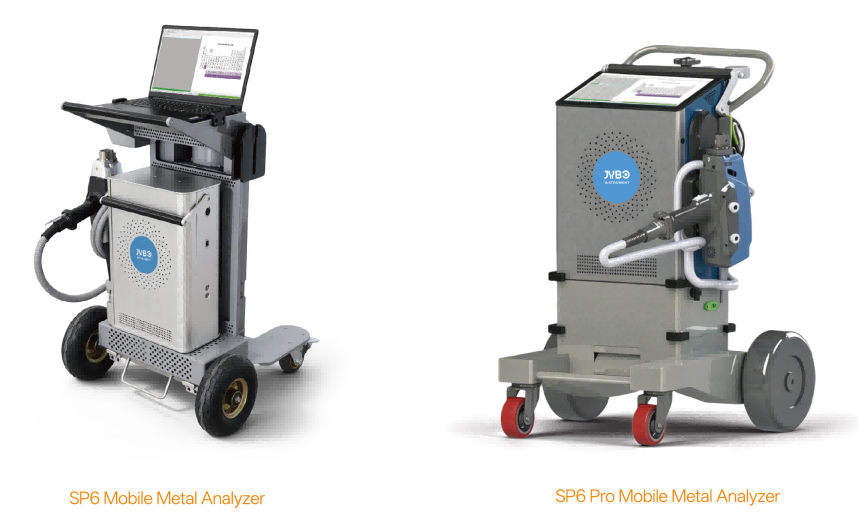
To meet the on-site material identification requirements of oil and gas pipelines, refinery equipment, and large metal structures, the JINYIBO SP6 Mobile Metal Analyzer uses Arc/Spark Optical Emission
Spectrometry (OES) for elemental analysis of suitable metal materials.
Unlike conventional laboratory testing that requires samples to be transported to a laboratory, the SP6 brings OES analytical capabilities directly to production, construction, and inspection sites, making on-site material verification more convenient.
5.1 On-Site Testing Solutions with the SP6 Mobile Metal Analyzer
Material Identification of Pipelines and Alloy Fittings
Material Quality Control During Pipeline Construction
On-Site Analysis of Large Pipelines and Industrial Equipment
Rapid On-Site Analysis and Material Data Management
5.2 Multi-Matrix Analysis and Light Element Detection
The JINYIBO SP6 supports multiple matrix analysis programs for different metal base materials. In addition to conventional alloying elements, it can analyze light elements that are difficult or limited to measure with traditional handheld alloy analyzers.
For steel analysis, the SP6 supports the detection of carbon (C), phosphorus (P), sulfur (S), and boron (B), providing additional elemental data for steel grade identification, material verification, and quality control.
Carbon content is an important parameter in the chemical composition analysis of pipeline steels. The SP6' carbon measurement capability provides data that can support steel composition verification and carbon equivalent calculations.
Actual performance depends on the applicable material matrix, calibration range, analytical accuracy, and measurement uncertainty, which must be confirmed for the intended application.
The arc/spark mobile metal analyzer also supports multiple metal matrices, including iron-based (Fe), aluminum-based (Al), and copper-based (Cu) materials, expanding its application across different metal analysis requirements.
FAQ
Q1: Which pipeline components can be tested with a mobile spark spectrometer?
Depending on the instrument's capabilities and testing requirements, mobile spectrometer can be used to identify the material composition of pipes, elbows, tees, flanges, valves, alloy components, and selected weld areas.
The actual testing scope depends on the instrument's analytical capabilities, component geometry, surface conditions, and applicable owner and pressure pipeline specifications.
Weld analysis only provides composition information for the specific test area. It cannot replace visual weld inspection, non-destructive testing (NDT), or other required weld quality inspections.
Q2: Which is better for oil and gas pipeline inspection: handheld XRF or mobile PMI spectrometer?
Both technologies have their advantages.
Handheld XRF is suitable for rapid alloy screening and PMI, generally without significant surface damage. Field Metal Analyzer is more suitable for steel composition analysis when key elements such as carbon, sulfur, and phosphorus need to be measured.
If carbon content or carbon equivalent calculations are required, an analytical method with validated measurement capabilities, appropriate calibration, and performance that meets project specifications should be selected.
On-site testing conditions and potential surface damage must also be considered to ensure compliance with relevant safety and quality requirements.
Please contact us for further inquiries or detailed information!
Tel:+86-183-5283 6805
Email:sales@jinyibo.com
Web:www.jinyibo.com