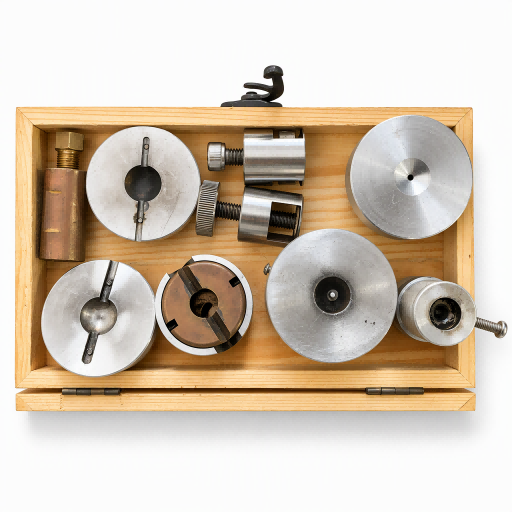
Small Sample Adaptor for Spark OES: How to Analyze Small Metal Samples?
Nov 11 , 2026
Боб
Эксперт по анализу металлов и лабораторному оборудованию
Имея многолетний практический опыт в области анализа материалов и применения лабораторных испытаний, Боб специализируется на предоставлении передовых решений для высокоточного элементного анализа. Он глубоко привержен помощи мировым металлургическим и производственным отраслям в оптимизации лабораторных процессов с использованием самых современныханализатор металлов приборы, включая Spark OES (оптический эмиссионный спектрометр), анализатор ONH, и анализатор CS, обеспечивающие надежный контроль качества и точную идентификацию материалов.
Jinyibo
Small Sample Adaptor for Spark OES: How to Analyze Small Metal Samples?
Overview
In metal elemental analysis, small metal components, thin metal rods, narrow test specimens, and irregularly shaped metal samples may be difficult to position directly on the standard sample stand of a Spark Optical Emission Spectrometer (Spark OES) due to their limited dimensions or special geometries. A Small Sample Adaptor is a dedicated accessory designed to assist in positioning and securing small metal samples. It provides appropriate support according to the sample's size and shape, helping establish suitable contact and testing conditions between the sample and the spark stand.
This article explains the function of a Spark OES small sample adaptor, the types of metal samples it can accommodate, the testing procedure, and important considerations for its use. It helps metal manufacturers and testing laboratories better understand how to perform elemental analysis on small metal samples.
1. What Is a Small Sample Adaptor for Spark OES?
A Spark Optical Emission Spectrometer (Spark OES) is an analytical instrument based on spark discharge emission spectroscopy. It is widely used for elemental analysis of metals in the steel, non-ferrous metal, foundry, metalworking, and materials quality control industries.
During routine testing, metal samples are generally placed on the instrument's spark stand. The sample surface must provide appropriate contact and sealing with the spark stand to maintain a stable argon atmosphere around the discharge area.
However, standard spark stands are primarily designed for metal specimens with suitable dimensions and geometries. When a sample is too small, too narrow, or irregularly shaped, several testing difficulties may arise:
Insufficient coverage of the testing area: The sample may be too small to adequately cover the spark stand aperture.
Difficult sample positioning: Small metal components may move or become misaligned with the designated spark discharge position.
Inadequate sealing: Gaps between the sample and the spark stand may affect the stability of the argon atmosphere.
Limited available discharge area: The sample surface may not provide sufficient space for multiple spark measurements.
Irregular sample geometry: Thin rods, narrow strips, and specially shaped components may be difficult to position directly on a standard sample stand.
A Small Sample Adaptor is designed to address these challenges. Depending on its construction, it provides dedicated support, positioning, or sample-fitting features to accommodate small metal specimens.
It is important to note that a small sample adaptor is an auxiliary accessory, not an independent analytical instrument. It does not change the inherent analytical capabilities of the spectrometer. Its primary function is to improve the mechanical positioning and fitting conditions between the sample and the spark stand. Its actual applicability depends on the spectrometer model and the adaptor design.
2. What Types of Metal Samples Require a Small Sample Adaptor?
In metal manufacturing, processing, and quality inspection, samples vary considerably in size and geometry. Even when a small specimen has the same material composition as a standard test specimen, its dimensions may prevent it from being positioned directly on a conventional spark stand.
A Small Sample Adaptor may be suitable for the following types of samples, although actual compatibility must be confirmed according to the adaptor specifications and instrument requirements.
2.1 Small Metal Components
In precision machining and manufacturing, small metal components often require material composition verification. Examples include small fasteners, metal connectors, machined components, and specially shaped metal parts.
These samples are typically characterized by their compact dimensions and complex geometries, making stable positioning on a standard spark stand difficult.
A suitable small sample fixture or positioning structure can help secure the component and align its testing surface with the spark discharge position.
2.2 Thin Metal Rods and Small-Diameter Cylindrical Samples
Thin metal rods, metal wires, and small-diameter cylindrical specimens are also common examples of samples that may require special positioning arrangements.
Due to their limited contact area, these samples may roll, shift, or fail to adequately cover the spark stand aperture when placed directly on a standard sample stand.
A dedicated adaptor designed for the corresponding diameter and geometry can help secure the sample and establish suitable contact and sealing conditions between its testing surface and the spark stand.
2.3 Narrow Metal Specimens
Some metal materials are cut or processed into narrow strips or small plate-shaped specimens. Their width may be insufficient to cover the testing area of a standard spark stand.
If the sample cannot adequately cover the discharge area, argon leakage may occur, potentially affecting the stability of the discharge conditions.
A suitable small sample support structure can improve sample positioning. However, it is important to ensure that the adaptor does not interfere with the spark discharge area or introduce contamination or other sources of interference.
2.4 Small Castings and Machined Metal Samples
In foundry operations and metalworking, small castings, prototype specimens, and limited-size process samples may also require elemental composition analysis.
These samples may not be suitable for conventional specimen preparation due to their dimensions or geometries. An appropriate sample-fitting solution should therefore be selected according to the actual sample configuration.
For cast metal samples, additional factors must be considered, including surface oxidation, casting defects, porosity, and potential microstructural inhomogeneity. Even when an adaptor allows the sample to be mounted successfully, the selected spark discharge area must still be representative of the material being analyzed.
3. How to Choose the Right Small Sample Adaptor for Spark OES?
Selecting a Small Sample Adaptor involves more than simply checking whether it can be installed on the instrument. Sample characteristics, analytical requirements, and instrument compatibility should all be considered.
First, confirm the spectrometer model. Different Spark OES brands and models may have different spark stand structures, aperture dimensions, and installation requirements. It is recommended to select an adaptor specifically designed for the corresponding instrument model.
Second, evaluate sample dimensions and geometry. Identify the diameter, width, thickness, and shape of the samples that need to be analyzed. Choose an adaptor with appropriate support and positioning features.
Third, verify the testing conditions. The adaptor must allow adequate coverage of the spark discharge area and meet the required argon sealing conditions. Its auxiliary structure must not interfere with normal spark discharge.
Finally, confirm actual analytical feasibility. For unusually shaped, extremely small, or thin metal samples, it is recommended to provide sample photographs and dimensional information to the instrument supplier. The supplier can then evaluate whether a Small Sample Adaptor is suitable and, where necessary, arrange testing with actual samples.
FAQ
Q1: Can a Spark Optical Emission Spectrometer directly analyze small metal samples?
A: Not necessarily. Spark OES has specific requirements for sample dimensions, surface flatness, and sealing conditions at the spark stand. If a small sample cannot adequately cover the effective testing area or establish a stable seal with the spark stand, normal spark discharge and analytical results may be affected.
For small samples that meet the applicable requirements, a dedicated Small Sample Adaptor can assist with positioning and securing the specimen. Actual testing feasibility depends on the sample dimensions, geometry, and instrument configuration.
Q2: Does using a Small Sample Adaptor improve the analytical accuracy of a Spark OES?
A: The primary function of a Small Sample Adaptor is to improve sample positioning, fixation, and compatibility with the testing area. It does not directly increase the analytical accuracy of the spectrometer.
The accuracy and repeatability of analytical results also depend on sample preparation, discharge conditions, argon protection, instrument calibration, and the compatibility of the calibration curve with the sample matrix. When the sample meets the requirements for valid spark analysis, an appropriate adaptor can help support more stable testing operations.
Please contact us for further inquiries or detailed information!