Copper Demand Surge: How Spark OES Dictates Quality Control in the AI Era
As the global demand for high-purity copper reaches a historic peak—fueled by the rapid expansion of AI data centers and power infrastructure—Spark OES (Spark Optical Emission Spectrometer) is emerging as the critical hardware reshaping metal metallurgy and material quality control (QC).
1. The AI Boom Fueling the Global Copper Demand Surge
A new consensus is solidifying across the technology and energy sectors:
"The end of AI is electricity, and the end of electricity is copper."
With the construction of massive AI data centers housing tens or hundreds of thousands of GPUs worldwide, the computing sector’s insatiable thirst for power has triggered an explosive, rigid growth in global copper demand.
Power Infrastructure Upgrades: To provide stable, uninterrupted, high-power electricity to AI servers, global power grids are undergoing rapid upgrades. Consequently, the consumption of high-conductivity copper for transformer coils and high-voltage busbars has hit record highs.
"Copper In, Fiber Out" Inside AI Servers: For ultra-short distance interconnections within AI server racks, high-speed copper cables (Direct Attach Cables, or DAC) are heavily replacing optical fibers. They have become the hardware connection medium of choice for GPU clusters due to their low power consumption, low latency, and superior cost-effectiveness.
Industry data indicates that the global refined copper supply chain is facing an unprecedented deficit in 2026. Copper has officially transcended its status as a traditional industrial commodity to become a strategic asset deeply intertwined with the evolution of artificial intelligence.

2. Why High-Purity Copper Testing is Critical for AI Infrastructure
The AI era's demand for copper is not just about a surge in volume; it is a stringent test of quality.
To ensure ultra-high-frequency signals remain distortion-free and power transmission losses are minimized, AI high-speed copper cables and power transformers must utilize high-purity copper (ranging from 99.99% to 99.999% purity) or specialized high-spec copper alloys.
Under such extreme manufacturing tolerances, even trace impurities can lead to catastrophic failures:
Parts-Per-Million (ppm) Level Impurities: Trace amounts of elements like Bismuth (Bi), Antimony (Sb), Arsenic (As), and Iron (Fe)—even at ppm levels—can severely degrade copper's electrical conductivity.
Impact of Gas Elements: If the micro-oxygen (O) content in the copper material is poorly controlled, it can easily trigger "hydrogen embrittlement" and wire breakage during the wire-drawing process, resulting in costly product scrapping.
Consequently, high-precision, high-efficiency metal analysis has become a core pain point for the safety of the entire AI hardware supply chain in 2026.
3. How Spark OES Dictates Quality Control in the Metallurgy Matrix
Faced with ppm-level detection limits and time-sensitive production schedules, Optical Emission Spectrometer serves as the "industrial radar" safeguarding copper quality across two pivotal scenarios:
Scenario 1: Furnace-Side Rapid Analysis
In melting shops producing copper strips, sheets, and high-purity copper wire rods, the online spark spectrometer acts as the ultimate anchor for quality assurance.
Ultra-Fast Execution: Technicians simply cast the molten copper into a standard sample, mill it via a lathe, and place it directly onto the Spark OES for excitation.
30-Second Turnaround: The instrument quantitatively analyzes dozens of elements—including light metals and trace impurities—simultaneously within 30 seconds. If any impurity exceeds the threshold, operators can adjust the batch composition immediately before tapping, preventing the scrapping of an entire furnace of molten copper.

Scenario 2: Positive Material Identification (PMI) at the Supply Chain Source
As high-value copper materials flood into AI data center construction sites, rack assembly plants, and EV wiring harness factories, on-site quality control is more critical than ever.
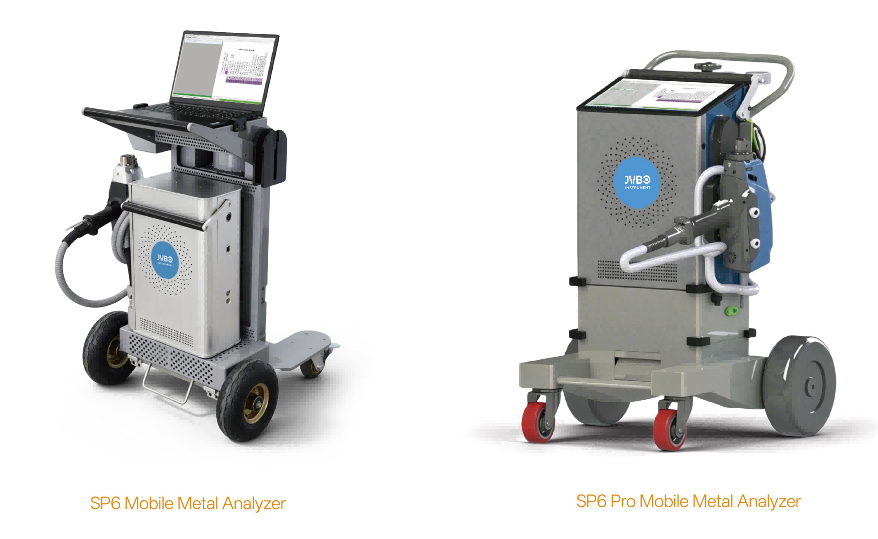
Mobile OES: Technicians can wheel mobile/portable Spark OES units directly into warehouses, shipping containers, or installation sites for real-time PMI testing (Positive Material Identification).
Laboratory-Grade Precision: Unlike handheld XRF devices—which struggle to detect light elements accuracy at trace levels—mobile Spark OES delivers laboratory-grade data right on-site, effectively preventing counterfeit or substandard copper from infiltrating the computing supply chain.
Conclusion: The Ironclad Guarantee of the AI Era
In 2026, the rise of AI has propelled global copper demand to a historic zenith. Yet, in this computing revolution woven from silicon wafers and high-spec copper cabling, the battle over material quality is inherently a battle over the precision of analytical technology.
From a boiling furnace of industrial molten copper to the dense high-speed networks within AI data centers, Spark OES commands the lifeline of impurity control through its exceptional trace-element detection capabilities. As the quality cornerstone of the AI hardware supply chain, it quietly safeguards this golden era of explosive computing growth.
FAQ
Q1: Why is Spark OES suitable for trace element analysis in high-purity copper?
Arc Spark Optical Emission Spectrometry (Spark OES) determines the elemental composition of copper by measuring the characteristic emission wavelengths and intensities generated when a spark excites the sample. It can simultaneously measure multiple elements, including Fe, Bi, Sb, and As, making it suitable for monitoring trace impurities in high-purity copper. Actual detection limits and analytical accuracy depend on the instrument configuration, calibration standards, sample preparation, and the specific element being measured. For reliable quality control, the method should be validated against the required purity specifications.
Q2: Can Spark OES measure oxygen content in high-purity copper?
Conventional Spark OES is primarily used to determine metallic elements and certain other elements in solid metal samples. However, it is generally not the preferred method for accurately measuring oxygen at trace levels in copper. For oxygen analysis, dedicated methods such as inert gas fusion with infrared detection are typically more appropriate. Therefore, when controlling oxygen content to prevent hydrogen-related defects during copper processing, manufacturers should select an analytical method specifically validated for the required oxygen concentration range.
Please contact us for further inquiries or detailed information!
Tel:+86-183-5283 6805
Email:sales@jinyibo.com
Web:www.jinyibo.com