High Frequency Infrared Carbon Sulfur Analyzer for Mineral and Ore Analysis
Quick answer
Carbon (C) and sulfur (S) are important analytical parameters in mineral exploration, ore beneficiation, smelting, and quality control. Their concentrations can influence ore valuation, metallurgical performance, processing efficiency, and environmental compliance.
A High Frequency Infrared Carbon Sulfur Analyzer provides a rapid and reliable method for determining carbon and sulfur concentrations in a wide range of mineral samples. By combining high-frequency combustion with infrared absorption detection, the analyzer enables simultaneous carbon and sulfur analysis, with typical analysis times of less than 60 seconds per sample, depending on the instrument configuration and testing conditions. It can also achieve ppm-level detection capabilities for suitable sample matrices and analytical ranges.
This article explores five major categories of mineral applications: ferrous metal ores, non-ferrous metal ores, precious metal ores, energy and carbonaceous minerals, and non-metallic minerals and flux materials. It explains the key testing parameters, analytical objectives, and process considerations for each category, helping mining laboratories and mineral processing facilities select appropriate carbon and sulfur analysis methods.
1. Carbon and Sulfur Analysis in Ferrous Metal Ores
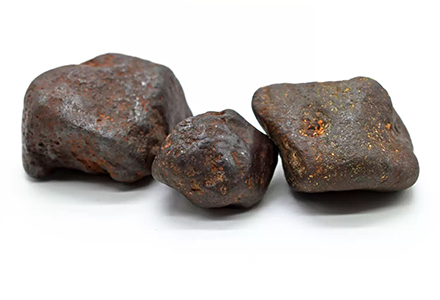
For ferrous metal ores, sulfur is an important impurity that must be controlled during ore beneficiation and ironmaking. Excessive sulfur can contribute to hot shortness in steel during hot working and increase sulfur dioxide (SO₂) emissions during high-temperature processing. Carbon analysis can also provide useful information about carbonate-bearing gangue minerals, such as calcite and dolomite.
Iron Ore (Hematite, Magnetite, and Limonite)
Key testing parameters: Total carbon (TC) and total sulfur (TS).
Application value: Sulfur analysis helps assess the sulfur burden of iron ore blends and provides information for evaluating desulfurization requirements during ironmaking. Carbon analysis can help estimate carbonate-related carbon contributions and support the evaluation of ore characteristics and sintering process conditions. Where carbonate content is required, carbon results should be interpreted alongside appropriate mineralogical or chemical analysis.
Relevant standard: GB/T 6730.61-2022, Iron Ores—Determination of Carbon and Sulfur Content—High Frequency Combustion with Infrared Absorption Method. This standard covers carbon and sulfur determination in natural iron ores, iron concentrates, sintered ores, pellets, and related products.
Manganese Ore and Chromium Ore
Key testing parameters: Carbon and sulfur impurities, including low-level concentrations where required by the production specification.
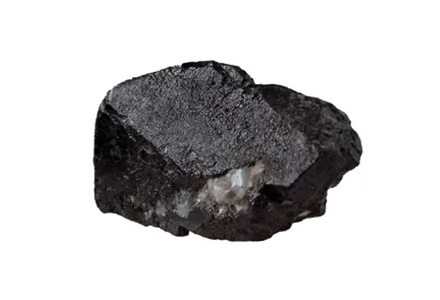
Application value: Manganese and chromium ores are important raw materials for producing ferromanganese and ferrochrome alloys. Carbon and sulfur concentrations directly affect alloy composition and the quality requirements of downstream steel products, particularly specialty steels and stainless steels. Reliable impurity analysis helps raw material suppliers and alloy producers maintain consistent production quality.
Relevant standards:
GB/T 14949.11-2021: Manganese Ores—Determination of Carbon Content—Gravimetric Method and Infrared Absorption Method.
SN/T 5347.1-2021: Determination of Carbon and Sulfur in Chromium Ores by High-Frequency Infrared Absorption Method.
2. Carbon and Sulfur Analysis in Non-Ferrous Metal Ores
Copper, Lead, Zinc, Nickel, and Cobalt Sulfide Ores
Key testing parameter: Total sulfur (TS), particularly in sulfide-rich ores and concentrates.
Application value: Sulfur is a major constituent of many non-ferrous sulfide minerals, including chalcopyrite, galena, sphalerite, and pentlandite. Determining sulfur content helps characterize ore composition, support the evaluation of beneficiation performance, and provide essential data for material balance calculations.
In flotation operations, sulfur analysis can be used alongside metal assays to evaluate concentrate quality and recovery performance. During subsequent roasting and smelting, sulfur measurements also help estimate the sulfur load and support the planning of sulfur dioxide recovery and sulfuric acid production processes.
Relevant standard: SN/T 5250-2020, Determination of Sulfur Content in Mineral Products by High-Frequency Combustion Infrared Absorption Method. This industry standard provides a relevant analytical reference for sulfur determination in mineral products.
3. Carbon Analysis in Precious Metal Ores: Supporting Refractory Gold Ore Processing
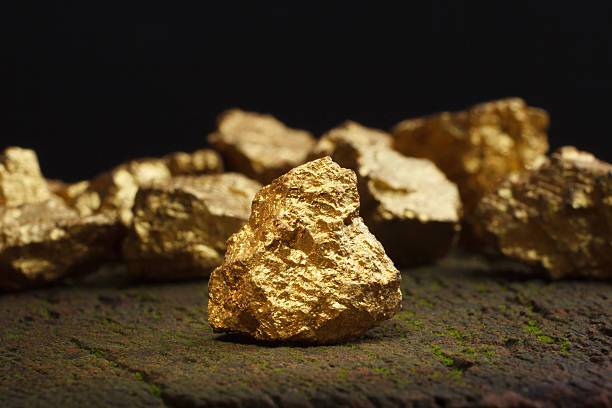
Carbon analysis plays an important role in evaluating certain refractory gold ores, particularly carbonaceous gold ores in which naturally occurring organic carbon can interfere with gold recovery.
Carbonaceous Gold Ores
Key testing parameters: Total carbon (TC), total organic carbon (TOC), and total inorganic carbon (TIC), depending on the analytical procedure.
Analytical consideration: A conventional high-frequency infrared carbon sulfur analyzer directly measures total carbon through combustion. It does not independently distinguish organic carbon from inorganic carbon. To determine TOC and TIC separately, the analysis must incorporate an appropriate acid pretreatment or separate inorganic carbon measurement procedure.
Application value: Some carbonaceous gold ores contain naturally occurring organic carbon with strong gold-adsorption properties. During cyanide leaching, this carbonaceous material can adsorb dissolved gold-cyanide complexes, resulting in reduced gold recovery. This phenomenon is commonly known as preg-robbing.
By determining organic carbon content through acid pretreatment by combustion analysis, laboratories can assess the potential impact of carbonaceous matter on gold extraction and support decisions regarding pretreatment processes.
Depending on the ore characteristics, possible treatment methods include high-temperature roasting and chemical oxidation to reduce the activity of carbonaceous matter. For sulfide-encapsulated refractory gold ores, other processes, such as bio-oxidation and pressure oxidation, may also need to be evaluated.
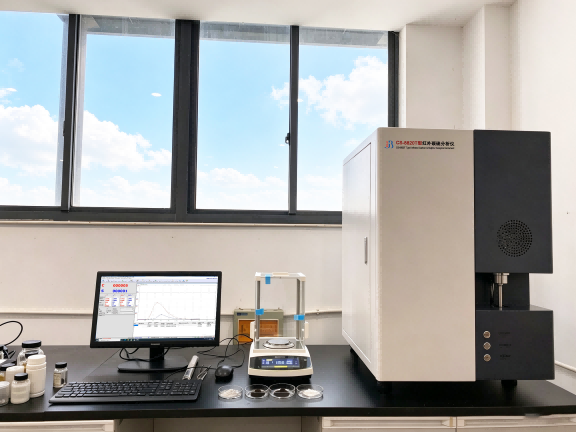
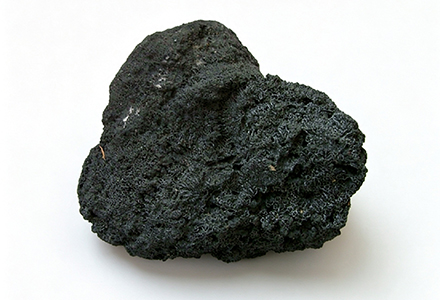
In energy-related mineral resources, carbon content is important for evaluating organic matter abundance and material composition, while sulfur is a key parameter for assessing fuel quality and potential environmental impacts during combustion.
Coal, Cleaned Coal, and Coke
Key testing parameters: Total sulfur (TS) and total carbon (TC), according to the analytical requirements.
Application value: Total sulfur is an important coal quality indicator used in coal classification, fuel selection, and combustion process management. High sulfur content can increase the requirements for flue gas desulfurization and environmental emission control.
For coke production, sulfur analysis also helps evaluate raw material quality and control sulfur transfer into metallurgical processes.
Relevant standard: GB/T 214-2026, Determination of Total Sulfur in Coal. Effective October 1, 2026, this standard replaces GB/T 214-2007 and GB/T 25214-2010. It covers the Eschka method, coulometric titration, infrared spectrometry, and high-temperature combustion neutralization. The Eschka method is specified for arbitration analysis.
Oil Shale and Source Rocks
Key testing parameter: Total organic carbon (TOC).
Application value: TOC is a fundamental geochemical parameter for evaluating the organic matter abundance and hydrocarbon generation potential of source rocks. It is widely used in petroleum exploration and geological assessment.
Because conventional combustion analysis measures total carbon, inorganic carbon must first be removed through acid treatment when TOC is required. The acid-treated sample is then washed, dried, and analyzed by combustion, following a validated procedure suitable for the sample matrix.
Natural Graphite Ore
Key testing parameters: Total carbon (TC), fixed carbon where applicable, and sulfur impurities (TS).
Application value: Carbon analysis helps evaluate the natural carbon grade of graphite ore and monitor the effectiveness of beneficiation and purification processes. Sulfur analysis provides additional information for assessing impurity levels and product quality.
For graphite used in battery-related applications and other high-purity industries, carbon content and impurity concentrations must meet the relevant product specifications. Carbon content alone, however, is not sufficient to establish battery-grade or nuclear-grade suitability; additional impurity, structural, and performance evaluations are required.
5. Carbon and Sulfur Analysis in Non-Metallic Minerals and Flux Materials
For non-metallic minerals, carbon analysis is often used to evaluate carbonate-related composition, while sulfur analysis helps monitor impurities that may affect industrial processing and final product quality.
| Mineral Type |
Key Testing Parameters |
Industrial Applications and Analytical Value |
| Limestone and Dolomite |
Total carbon (TC); total sulfur (TS) |
Important metallurgical flux materials. Carbon analysis can help estimate carbonate-related content when the mineral composition is well characterized. Sulfur determination helps monitor impurity levels. Appropriate chemical or mineralogical analysis is needed when calculating CaCO₃ and MgCO₃ content. Relevant reference: GB/T 3286.7-2014 for sulfur determination. |
| Fluorspar (Fluorite) |
Sulfur (S) and carbon (C) |
Used as a flux in metallurgical processes. Carbon and sulfur impurities may affect process quality and introduce unwanted components into molten metal. Sample preparation and combustion conditions must be carefully optimized because fluorine-containing compounds can create risks for the analytical gas path and instrument components. Suitable fluxing and trapping procedures should be established according to the sample composition and instrument manufacturer's recommendations. |
| Phosphate Rock |
Sulfur (S) and carbon (C) |
Used in phosphoric acid and phosphate fertilizer production. Sulfur content helps characterize the raw material and assess processing requirements, while carbon-bearing components can influence acid consumption, filtration behavior, and the properties of phosphogypsum by-products. |
| Kaolin and Refractory Clay |
Residual carbon (C) and sulfur (S) |
Used in ceramics and refractory material manufacturing. Excessive residual carbon and sulfur may contribute to black cores, pores, discoloration, and other defects during firing, depending on the material composition and firing conditions. |
FAQ
Q1: What challenges may occur when analyzing high-sulfur ores and high-carbon minerals with a high-frequency infrared carbon sulfur analyzer?
A:When testing high-sulfur minerals, such as pyrite and copper concentrates, or high-carbon materials, such as natural graphite, laboratories may encounter several analytical challenges.
1. Measurement range exceedance and detector saturation
High concentrations of sulfur or carbon can generate large quantities of combustion gases, potentially exceeding the measurement range of the infrared detection system. Detector saturation may appear as a flattened peak or an abnormally high signal.
Recommended solutions:
Reduce the sample mass according to the expected analyte concentration and the instrument's validated measurement range. For example, sample masses may need to be reduced from 0.1 g to approximately 0.01–0.05 g.
Select an appropriate high-range calibration curve or measurement channel if supported by the analyzer.
Optimize the type and quantity of combustion accelerators, such as tungsten-based fluxes or iron additives, according to the sample matrix and analytical method.
Verify the calibration range and measurement linearity before routine testing.
2. Intense combustion and sample spattering
Some sulfide-rich ores may undergo vigorous oxidation during combustion in oxygen, producing substantial heat, molten material, and dust. These by-products can contaminate the combustion chamber and potentially obstruct the gas path.
Recommended solutions:
Optimize the accelerator combination and sample preparation procedure to achieve stable combustion.
Use suitable protective components, such as quartz protection tubes, where supported by the instrument design.
Inspect and replace dust filters, filter cotton, and metal mesh components at appropriate intervals.
Perform routine maintenance to prevent particulate accumulation and gas flow restrictions.
Q2: How can a carbon sulfur analyzer distinguish between total organic carbon (TOC) and total inorganic carbon (TIC) in mineral samples?
A:A conventional high-frequency infrared carbon sulfur analyzer measures total carbon (TC) through high-temperature combustion. It cannot directly distinguish organic carbon from inorganic carbon without additional sample preparation or a separate measurement procedure.
Two commonly used approaches are available.
Method 1: Acid Pretreatment and Difference Calculation
This approach determines TOC and TIC through separate measurements.
Analyze the first representative sample directly using the carbon sulfur analyzer to obtain total carbon (TC).
Treat a second sample with a suitable dilute acid, commonly hydrochloric acid (HCl), to decompose carbonate minerals and remove inorganic carbon as carbon dioxide (CO₂).
Wash, filter, and dry the remaining solid residue according to the validated analytical procedure.
Analyze the pretreated residue using the carbon sulfur analyzer to determine total organic carbon (TOC), provided that the pretreatment does not remove or alter the organic carbon fraction.
The inorganic carbon content is then calculated as:
TIC = TC − TOC
This method requires representative parallel samples and careful control of acid treatment, washing, and drying conditions.
Method 2: Direct Inorganic Carbon Measurement and Residual Organic Carbon Analysis
A dedicated acidification system can be used to react carbonate minerals with acid and release CO₂. The evolved CO₂ is carried to an appropriate infrared detection system for TIC measurement.
After inorganic carbon removal, the remaining sample residue can be combusted to determine TOC using a suitable high-temperature combustion and infrared detection procedure.
This approach is useful in specialized analytical workflows for source rock evaluation and carbonaceous gold ore characterization.
Important note: The accuracy of TOC and TIC determination depends on sample homogeneity, complete carbonate removal, organic carbon recovery, and the suitability of the pretreatment method. Laboratories should validate the procedure using appropriate reference materials and quality control samples.
Please contact us for further inquiries or detailed information!
Tel:+86-183-5283 6805
Email:sales@jinyibo.com